
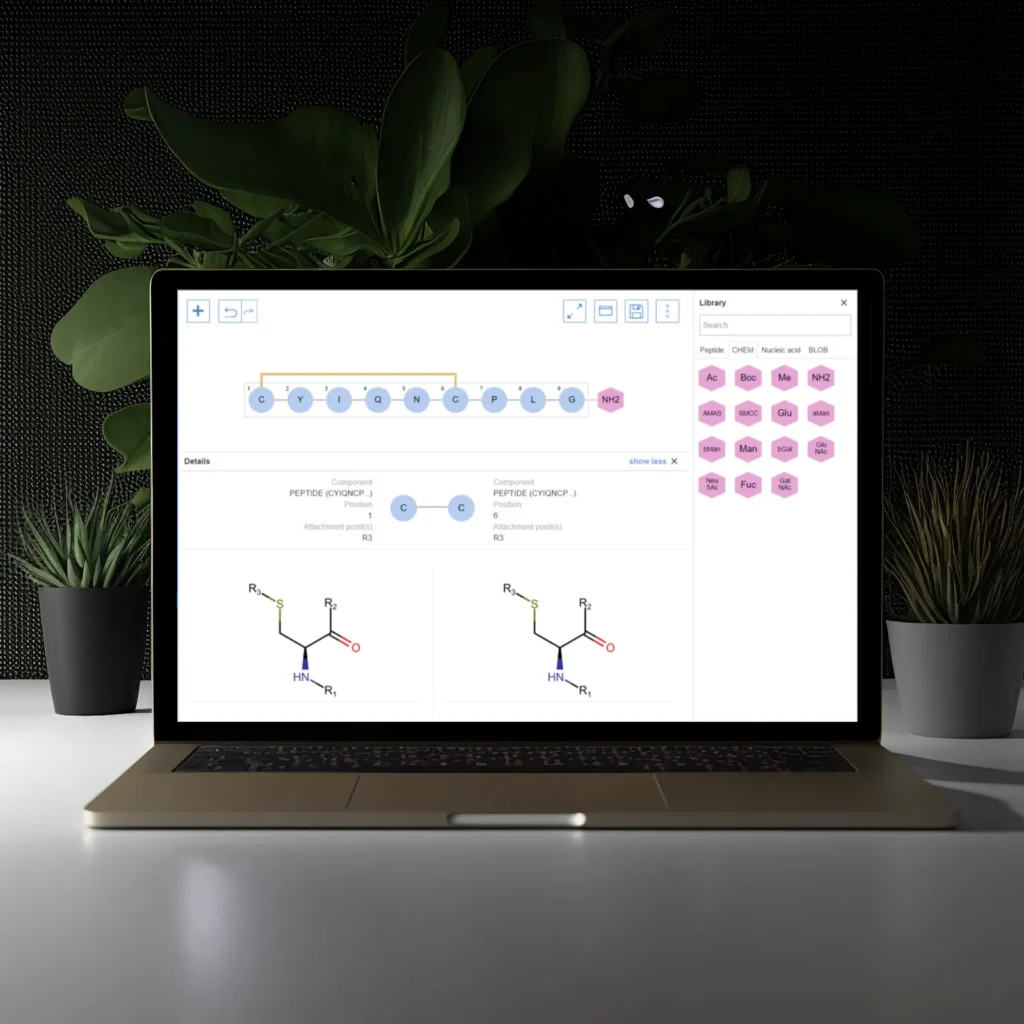
Let me explain myself first
This project is not new: we started building it in 2015. Usually it’s not wise to keep an old piece like that in a designer portfolio. It’s here because I was super proud of it and working on it gave me countless happy moments.
A quick demo: watch this video.
01 The problem
Before BioEddie it used to be quite a challenge to visualize and edit macromolecules. Biochemists had to have deep IT knowledge to handle command line interfaces and special scripts, to manage database connections and run queries.
ChemAxon built it as part of a collaboration via the Pistoia Alliance.1 It evolves from a Java precursor (“HELM Editor”) and aims to offer a more accessible, robust, web-based alternative.
02 The process
The product owner (business scientist) is a biochemist, already had a lot of experience with the Java-based HELM Editor, and knew the problems. We had a good start having his knowledge, and since BioEddie was developed together with the Pistoia Alliance, regular feedback was provided as well.
Our team worked together closely: aside from the dedicated weekly meetings we had frequent ad hoc brainstormings.
03 The solution
Our goal was to create a tool for biochemists which is relatively easy to use. We knew that a modern visual interface would serve the purpose well.
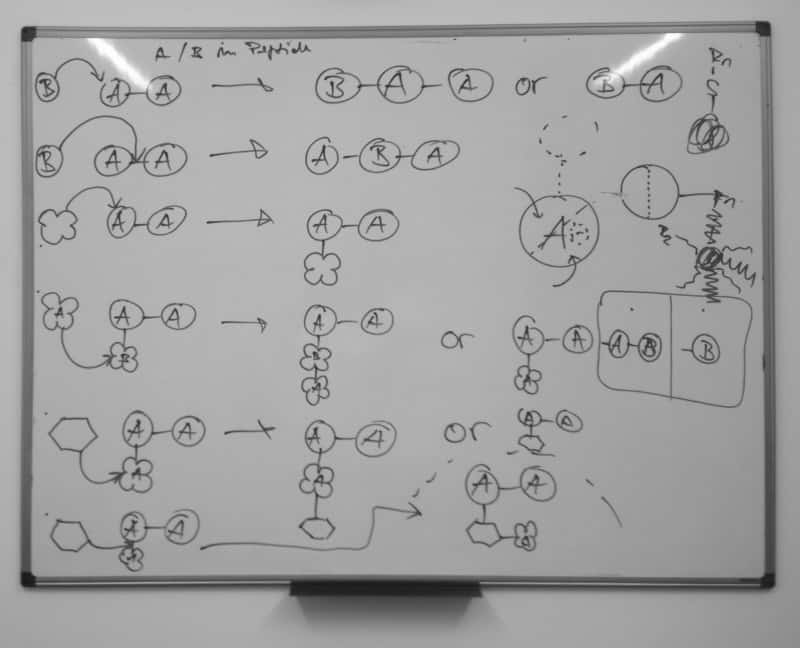
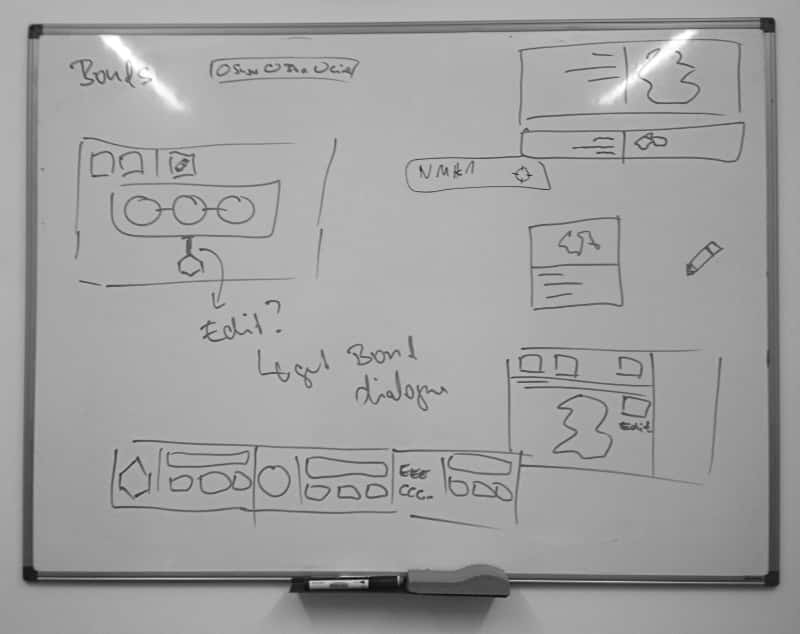
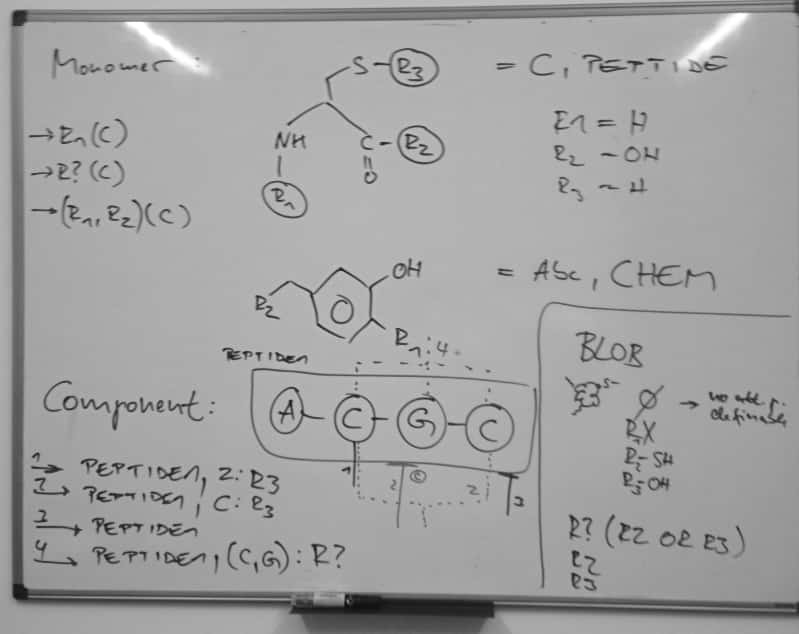
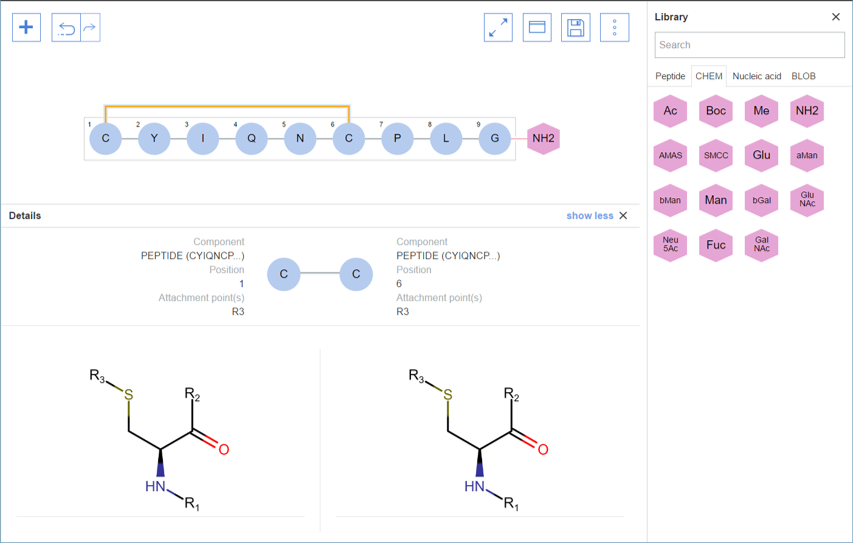
Through rough sketches we realised we have to divide the workspace to the following parts: a toolbar, a canvas, a library panel and a secondary view.
The canvas is the main working area where macromolecules are created, edited and visualized.
The library panel holds a set of monomers, which can be extended using the built-in library manager. The library can be browsed and searched using this panel.
The secondary view area provides an additional surface for different contexts/representations of macromolecules present in the editor.
Maybe it’s best to watch the quick demo above.
A long video explaining BioEddie
- The Pistoia Alliance brings together the biopharmaceutical ecosystem, powering collaboration to drive innovation and new breakthroughs.
A global community of more than 200 member organizations from across the biopharma ecosystem collaborates to solve common problems, sharing expertise and R&D costs, to move the industry forwards and ensure better outcomes for all. ↩︎